






Access to your account to proceed
Le Corbusier, Pierre Jeanneret, Charlotte Perriand
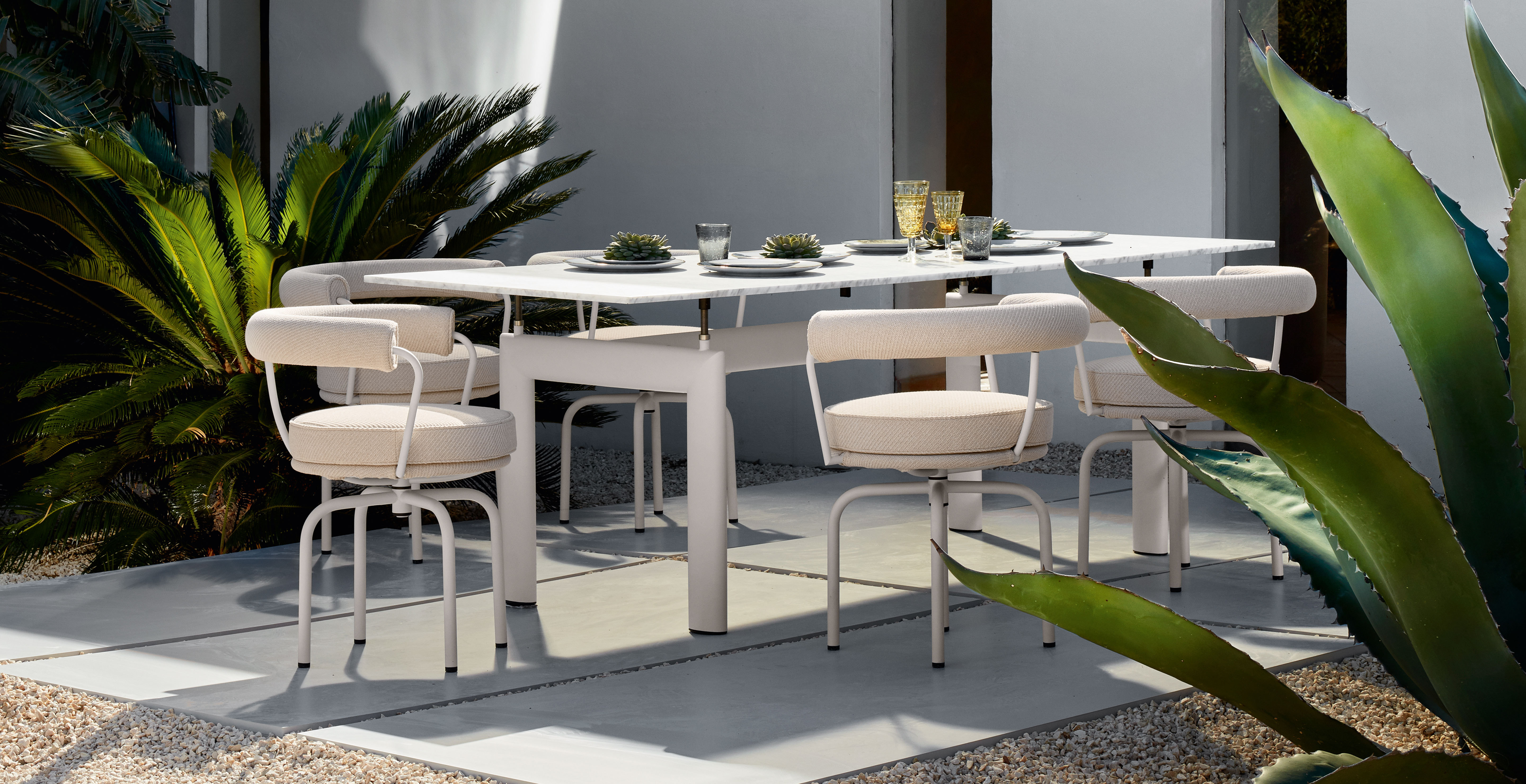
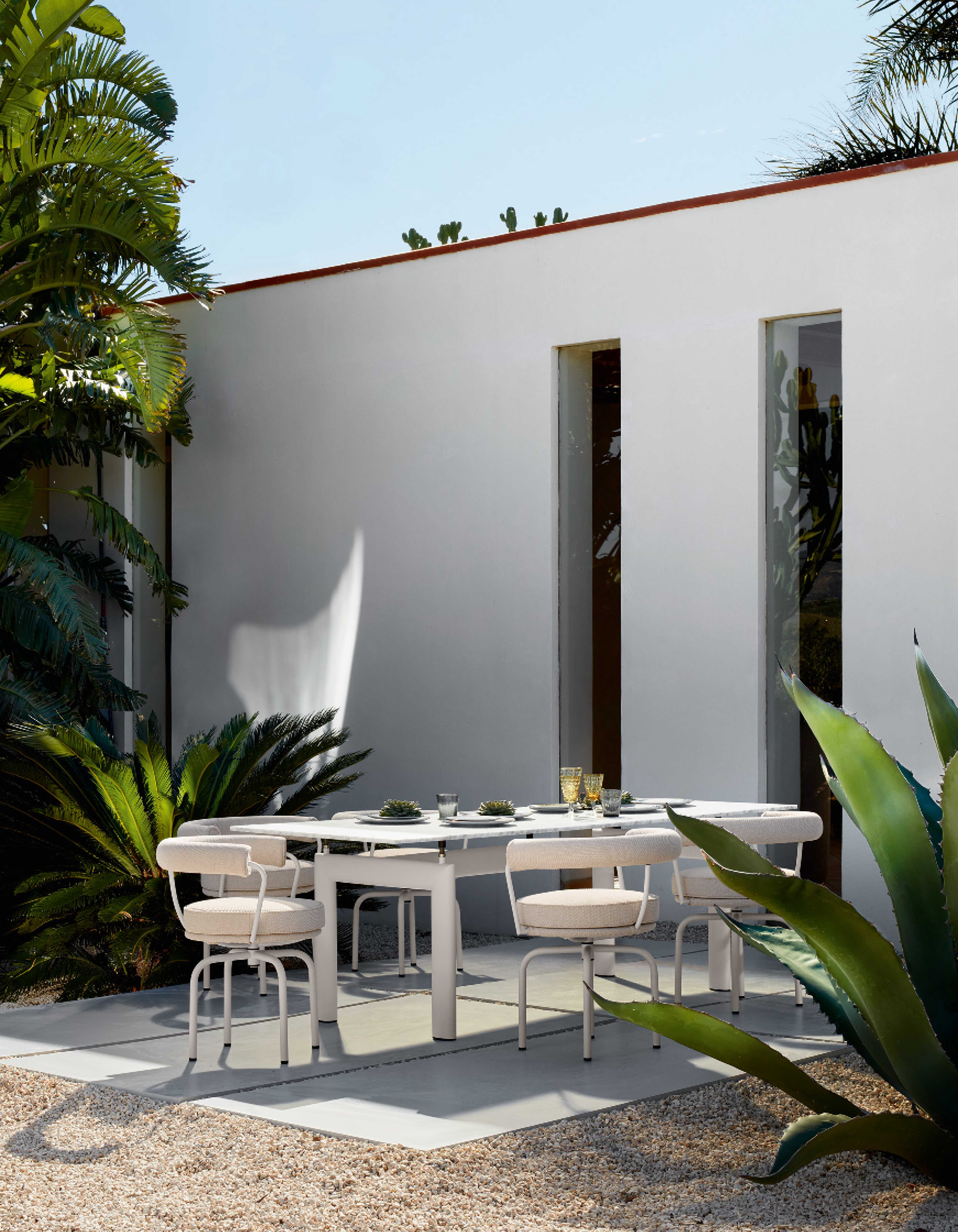

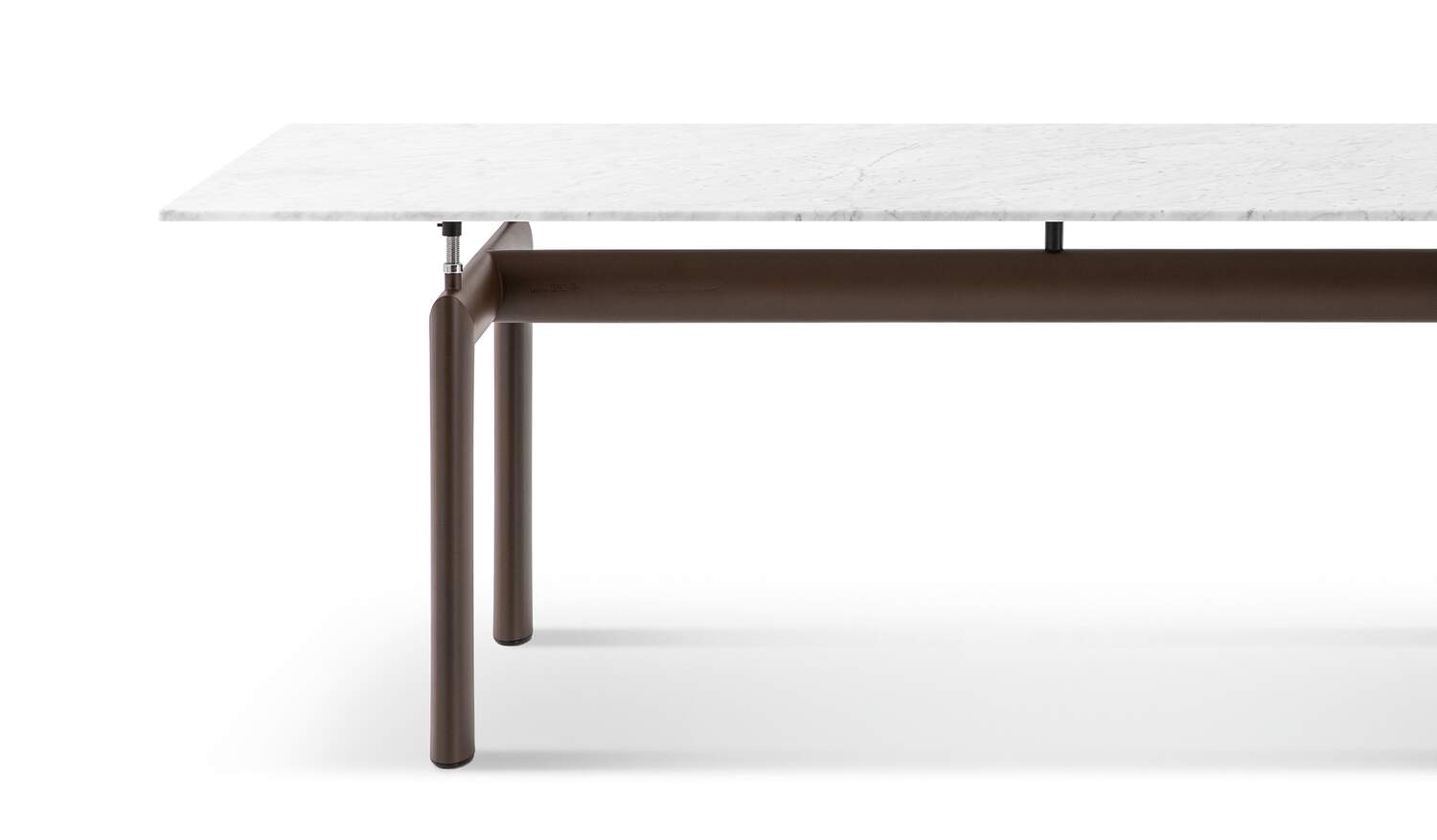
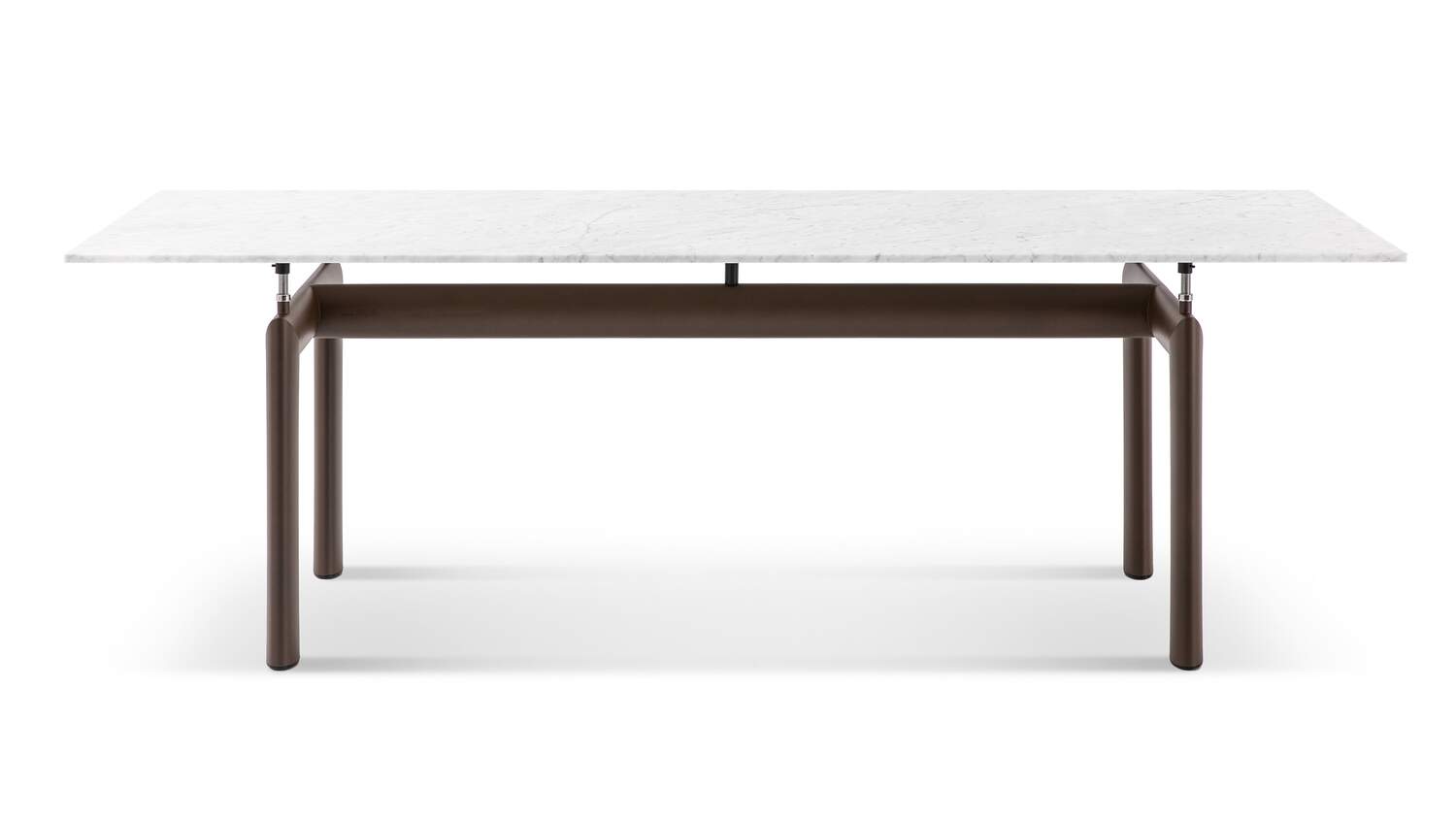
The concept of the iconic Table tube d’avion lies in the distinction between the support piece and the piece being supported; in other words, between the base and the top.
The independence of the two parts of this table is highlighted by the four intermediate supports that serve both as level adjusters and as spacers between the bulk of the support and the slender lines of the top.
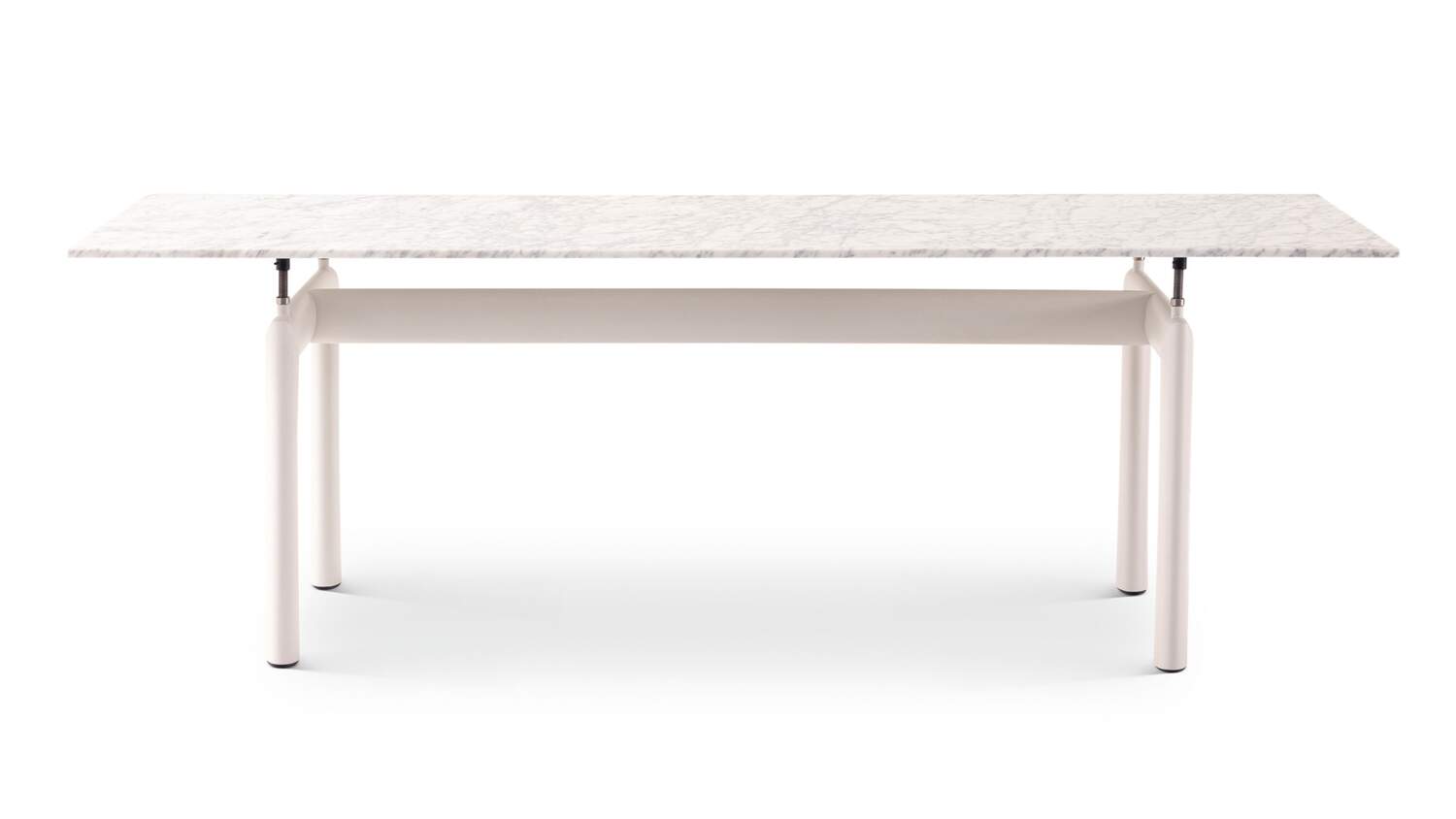
Made for outdoor settings, this outdoor table has a stainless-steel structure with a textured powder-coated finish designed for outdoor use, it comes in several colors.
DESIGN BY
PRODUCT CARE AND MAINTENANCE
In this manual you will find some recommendations for the care and maintenance of your Cassina products.
The materials are divided into different categories; each one is accompanied by its own information sheet with instructions, preventative measures and methods for cleaning.
Downloads
Access 2D and 3D drawings, technical sheets, and complete documentation to explore every detail of our products.
Designed for professionals and those seeking in-depth information.
2019
The core concept for the Table tube d’avion table, introduced in 1929 at the Salon d’Automne, lies in the distinction between the support piece and the piece being supported; in other words, between the base and the top.
The separation of the two parts is highlighted by the four intermediate supports that serve both as level adjusters and as spacers between the mass of the support and the slender lines of the top.
Specifically, the base was designed in 1928, taking its cue from the oval profiles used in the aeronautical sector to separate the wings of biplanes. The current model also comes in an outdoor version with stainless-steel structure and textured powder-coat finish specifically for outdoor use, in five colours.
Regular use of protective covers, available for separate purchase, helps preserve the aesthetic and functional characteristics of the outdoor product.
However, it is recommended to place products intended for outdoor use in controlled environments such as verandas and covered or partially covered terraces, avoiding full exposure to direct sunlight and weather conditions.
I MAESTRI
In 1922, Le Corbusier began working in the new rue de Sèvres, Paris, atelier with his cousin Pierre Jeanneret with whom he shared research projects and design criteria in a profound and life-long professional relationship. In October 1927, the pair decided to draw on the contribution of a young architect who had already begun to establish a reputation on the architectural scene of the time: Charlotte Perriand. Their collaboration lasted through to 1937 and was extremely fruitful, especially in the field of furniture design.
Read more.
Access to your account to proceed